For many people with Ehlers-Danlos syndrome (EDS), a diagnosis comes only after years of normal test results, partial explanations, and advice to stretch more or worry less. Some are told the problem is in their head. EDS is a well-established diagnosis, and what the medical community tends to miss about it follows a pattern that an experienced clinician can identify.
That delay is not shared evenly. Hypermobile EDS (hEDS), the most common type, disproportionately affects women, and research describes significant diagnostic delays that fall hardest on them.
Once you know, or strongly suspect, that joint hypermobility sits at the center of your health, a practical question follows: who treats this? No medical specialty is devoted to EDS, so the more useful question is what kind of care to look for.
Why EDS Care Can Be Difficult to Find
Ehlers-Danlos syndrome is a group of inherited connective tissue disorders that affect collagen, the structural protein that gives ligaments, skin, blood vessels, and other tissues their strength. Because collagen is found throughout the body, EDS rarely involves just one system: the joints, digestion, skin, heart rate, and allergy-like reactions can all be part of the picture.
In medicine, we tend to divide the body by organ system, and EDS does not respect those divisions. A rheumatologist evaluates the joints, a cardiologist the palpitations, and a gastroenterologist the digestive symptoms. Each may provide excellent care and still miss the pattern that connects them. What people with EDS often need is a clinician who recognizes that pattern and coordinates care around it.
What to Look For in an EDS Specialist
- A careful clinical evaluation. There is no laboratory test for hEDS. It is diagnosed clinically, through a detailed history and physical examination measured against the 2017 international criteria, which include a standard assessment of joint hypermobility called the Beighton score. Genetic testing is used when another type of EDS or a related condition is suspected, which matters because some of those call for different monitoring. A negative genetic test does not, on its own, rule out hEDS.
- Screening for common companions. EDS is often reported alongside two other conditions. Postural orthostatic tachycardia syndrome (POTS) is a form of dysautonomia, or autonomic nervous system dysregulation, in which the heart rate rises excessively on standing. Mast cell activation syndrome (MCAS) occurs when mast cells, a type of immune cell, release chemical signals too readily and cause allergy-like reactions. Together, the three are sometimes called the trifecta. In my view, an evaluation that never asks about lightheadedness on standing, or about reactions to foods, medications, or fragrances, is incomplete.
- Coordinated care. EDS care tends to work best as a single plan that accounts for the joints, autonomic symptoms, digestion, sleep, and nervous system regulation, rather than as a series of referrals that never inform one another.
- Joint-stability options beyond rest. Depending on the person, these may include appropriately graded strengthening, bracing when it helps, and regenerative options such as prolotherapy, which is designed to support the body’s healing response in lax ligament tissue.
- Attention to structural concerns. A knowledgeable clinician also watches for problems such as craniocervical instability (CCI), excess movement where the skull meets the upper neck. CCI appears to affect only a minority of people with EDS, and distinguishing true instability from ordinary hypermobility requires careful assessment.
- A clinician who takes your history seriously. Many people with EDS have had their symptoms attributed to stress, anxiety, or deconditioning before anyone considered a connective tissue disorder. Being heard is not simply a courtesy; it is part of an accurate evaluation.
Questions to Ask Before Your First Visit
- How many patients with EDS or hypermobility do you currently care for?
- How do you evaluate and manage overlap with POTS and MCAS?
- What is your approach to exercise and joint protection for hypermobile patients?
- Which services do you provide in-house, and when do you refer to other specialists?
A good specialist will welcome these questions. A clear answer, including a candid account of what a clinic does not offer, is a reassuring sign.
How We Approach EDS at NW Regen
At NW Regen in Portland, my practice focuses on complex chronic conditions, including EDS, POTS, and MCAS. My approach is integrative, combining herbal therapies, lifestyle support, and medication management, and it is built around the fact that these conditions so often overlap.
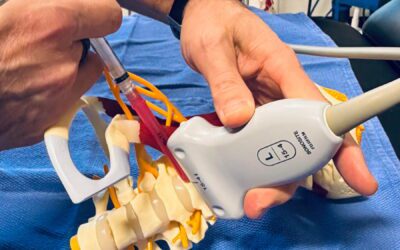
For many people, joint instability is the most disruptive part of EDS, so I work alongside our regenerative orthopedics team. Depending on the person, that may include prolotherapy for lax, painful joints and, for some patients with significant dysautonomia symptoms, stellate ganglion blocks (SGB), image-guided injections near a bundle of nerves in the neck, as a possible adjunct. The goal is a single, coordinated plan, delivered in one clinic.
You deserve care that considers you as a whole person, believes your lived experience, and makes plans that help bring you back to living your life.
Scheduling an EDS Consultation in Portland
If you’re looking for an EDS specialist in Oregon, we’d be glad to talk with you about whether NW Regen is the right fit. It helps to bring any previous records and a list of your symptoms, including those that seem unrelated, since with EDS they often turn out to be connected. Contact us to schedule a consultation with Dr. Alicia Hart.
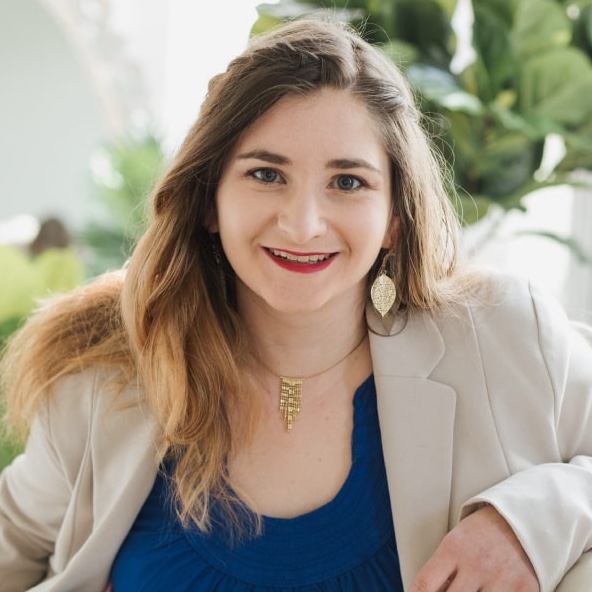
Dr. Hart specializes in mental health, neurodiversity, ADHD, anxiety, complex post-traumatic stress disorder (CPTSD), depression, and postpartum mood disorders. Additionally, Dr. Hart specializes in complex chronic conditions, including EDS, MCAS, and POTS.
She earned her Doctorate in Naturopathic Medicine and a Certificate in Natural Childbirth in 2015 from the National University of Natural Medicine. After completing a rigorous three-year residency in family practice, pediatrics, and women’s health at SW Family Physicians, she founded her own practice in SW Portland before joining NW Regen in 2025.