Your head feels too heavy for your neck. Headaches bloom at the base of your skull. Turning to check a blind spot brings dizziness, brain fog, or a wave of “wrongness” that’s hard to put into words.
If that sounds familiar — especially if you’ve been told your imaging looks “normal” — you may already suspect craniocervical instability (CCI). And if you’ve researched it online, you’ve probably landed in some frightening territory: fusion surgery, hardware, long recoveries.
Here’s what often gets lost in that search spiral: surgery is not the starting point for most people with CCI.
A Quick Refresher: What Is CCI?
Craniocervical instability is excessive movement where the skull meets the top two vertebrae of the spine (C1 and C2). The strong ligaments that normally hold this junction firmly in place — while still allowing your head to nod and turn — become lax or injured, and the joint moves more than it should.
That laxity can follow trauma such as whiplash, or come with connective tissue conditions like hypermobile Ehlers-Danlos Syndrome (EDS), where ligaments are looser by nature. Because this junction sits so close to the brainstem, upper spinal cord, and key blood vessels, symptoms can be widespread and confusing.
Symptoms may include:
- Headaches at the base of the skull
- A sense that your head is too heavy — the “bobblehead” feeling
- Neck pain and constant muscle guarding
- Dizziness or feeling off-balance
- Brain fog and fatigue
- Symptoms that worsen when upright and ease when lying down
Why Diagnosis Can Be So Frustrating
Standard MRIs are usually taken lying down, with the neck in a neutral position — the exact position where an unstable joint is most likely to look fine. Instability is a problem of movement, so it often only shows itself with a careful clinical exam and, when appropriate, imaging that assesses the neck in motion or under load.
If you’ve been dismissed because a scan came back “unremarkable,” that doesn’t mean nothing is wrong. It may simply mean the right question hasn’t been asked of the right image yet.
Non-Surgical Treatment Options for CCI
For most patients, treatment starts — and often stays — outside the operating room. Depending on your situation, a plan may include:
- Education and load management. Understanding which positions, activities, and habits provoke symptoms, and how to modify them without shrinking your life down to nothing.
- Targeted rehabilitation. Carefully graded strengthening of the deep stabilizing muscles of the neck, so muscle support can help compensate for lax ligaments. This is slow, specific work — not generic neck exercises.
- Posture and cervical curve support. The upper neck doesn’t work in isolation; improving how the whole cervical spine carries the head can reduce strain at the top.
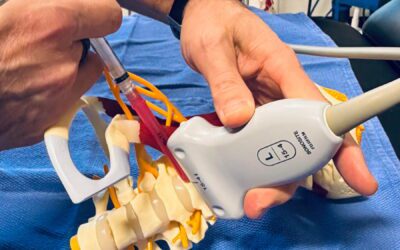
- Regenerative injection therapies. Prolotherapy and PRP (Platelet-Rich Plasma) can be directed at the supporting ligaments of the upper neck. These injections are designed to stimulate the body’s natural healing response in lax ligament tissue — aiming at the underlying stability problem rather than only the symptoms.
- Whole-system support. CCI often travels with nervous system dysregulation and conditions like POTS; pacing, sleep, and autonomic support can matter as much as the neck itself.
A note on honesty: the research on regenerative injections for CCI is still early — largely case series and clinical experience rather than large controlled trials. For carefully selected patients, though, it offers a non-surgical option aimed at the root of the problem, delivered with image guidance and a conservative, stepwise approach.
So When Is Surgery Considered?
Fusion surgery has a real place — for severe instability with progressive neurological signs, it can be necessary and even life-changing. But it’s generally treated as a last resort, reserved for cases where conservative and regenerative options have been genuinely exhausted or red-flag symptoms demand it.
It’s not about avoiding surgery at all costs. It’s about making sure it’s truly needed first.
“I’ve been performing upper cervical joint and ligament injections since 2019, and we currently treat six to eight cases each week. In our clinical experience, we’ve seen very good results when instability is a meaningful contributor to a patient’s symptoms.
“Careful diagnosis matters because symptoms of upper cervical instability, dysautonomia—including sympathetic hyperarousal—and conditions affecting the brainstem can overlap. Our experience has also helped us recognize other possible causes, including Eagle syndrome, CSF leaks, and occipital neuralgia. We work to distinguish these conditions, recognize when they coexist, and connect patients with trusted specialists when additional evaluation or treatment is needed.”
— Ryan R. Wood, ND, DC, RMSK
Getting Evaluated at NW Regen
At NW Regen, Dr. Ryan Wood evaluates and treats upper cervical instability with a background that spans both structural and regenerative medicine. If your symptoms fit the pattern above — or you’ve been diagnosed with CCI and want to understand your non-surgical options — contact us to schedule a consultation with Dr. Wood.
Dr. Ryan Wood, ND, DC, RMSK, is the Founder & Clinical Director of NW Regen. A licensed Naturopathic and Chiropractic physician certified in musculoskeletal sonography, he focuses on interventional orthopedic and orthobiologic medicine — including PRP, prolotherapy, and adipose-derived stem cell therapies — as well as general musculoskeletal and non-surgical orthopedic medicine. He is the West Coast’s leading Stellate Ganglion Block specialist, having performed nearly 3,000 DSR-SGB procedures for trauma, dysautonomia, and post-COVID syndromes since 2017. Dr. Wood is a lecturer and instructor for the Hackett Hemwall Patterson Foundation and the European School of Prolotherapy. He teaches interventional regenerative orthopedics and diagnostic ultrasound and provides hands-on physician training in SGB domestically and internationally. With almost two decades of orthopedic practice across multiple disciplines, he brings extensive experience to the diagnosis and management of complex cases.