If you’ve been researching stellate ganglion blocks, you’ve probably noticed the vocabulary multiplying: single, dual, DSR and bilateral dual.
Are these different procedures—or simply different names for similar approaches?
Fair questions. Let’s untangle the terminology.
First, a Quick SGB Refresher
A stellate ganglion block (SGB) is an image-guided injection of local anesthetic near the cervical sympathetic chain—a network of nerves in the neck involved in regulating the sympathetic, or “fight-or-flight,” response.
SGB has traditionally been used to treat certain pain syndromes. More recently, it has been studied as a way to interrupt sympathetic hyperarousal when the body’s stress response appears to be stuck in overdrive. This is why SGB is now being explored for trauma-related symptoms, anxiety, traumatic brain injury, dysautonomia, certain chronic pain conditions and other disorders involving sympathetic nervous system dysfunction.
New to SGB? Start with our Top Five SGB Questions.
What Makes a Block “Dual”?
A traditional SGB generally involves a single injection performed at approximately the C6 level. Although the stellate ganglion itself is typically located lower in the neck, the cervical sympathetic chain is commonly approached at C6 because it provides a favorable and well-established access point.
A dual SGB adds a second injection during the same procedure on the same side of the neck. At Northwest Regenerative Orthopedics, the first injection is performed at C6 and the second is placed higher, at approximately C3, near the upper cervical sympathetic chain.
Why use two levels?
The sympathetic nervous system in the neck is not a single isolated point. It is a chain containing several interconnected ganglia that relay signals involving the brain, face, neck and body. Treating both a lower and upper level is intended to produce more complete interruption of this chain rather than depending on medication from one injection to spread far enough to affect both regions.
What Does “DSR” Mean?
DSR stands for Dual Sympathetic Reset, a term popularized by Dr. Eugene Lipov to describe a two-level sympathetic block protocol for trauma-related symptoms.
In practical terms, DSR generally refers to a dual-level SGB approach. However, the exact injection levels, medication, volume and timing may vary among providers.
Retrospective studies involving patients with trauma-related symptoms suggest that a two-level technique may produce a stronger or more consistent response than a single injection. Controlled, head-to-head research comparing the protocols remains limited.
At NW Regen, the dual-level approach is our standard technique. Dr. Ryan Wood has performed more than 3,500 stellate ganglion block procedures and teaches ultrasound-guided SGB techniques nationally and internationally. It remains one of the most frequently requested procedures at our Portland-area clinic.
What Does “Bilateral Dual” Mean?
“Bilateral” simply means treating both sides of the neck. Because the right and left cervical sympathetic chains can influence different patterns of autonomic activity, some patients may benefit from treating both sides.
The two sides are generally treated on separate days rather than during the same visit. Treatment commonly begins on the right, although the starting side may be adjusted based on the patient’s symptoms and clinical presentation. The patient’s response is then evaluated before the opposite side is treated.
Separating the two sides is a deliberate safety and clinical-evaluation decision—not an upsell. It allows us to observe how the patient responds to the first procedure while reducing the risks associated with simultaneously blocking both sides of the neck.
What Stays the Same?
Whether an SGB is single or dual, several fundamentals remain the same:
- It is performed in the office under real-time ultrasound guidance.
- The injections themselves generally take only a few minutes, followed by a period of observation.
- Temporary effects on the treated side may include a drooping eyelid, smaller pupil, red eye, facial warmth or nasal congestion. Together, these findings are known as Horner syndrome.
- These effects are expected evidence that the sympathetic chain has been affected and typically resolve within several hours.
- Temporary hoarseness or difficulty swallowing can also occur, which is why patients receive specific swallowing precautions after the procedure.
Who Might Benefit From a Dual SGB?
SGB—whether single or dual—is not a universal solution, and careful patient evaluation matters.
It may be worth discussing for people experiencing trauma-related hyperarousal, a persistent fight-or-flight response, certain sympathetically maintained pain conditions, dysautonomia or POTS symptoms, or lingering symptoms following COVID-19. Research in several of these areas remains active and continues to evolve.
“I use a dual-level approach because the cervical sympathetic system is a chain, not a single point. Treating both the lower and upper portions gives us a more complete and clinically consistent sympathetic block while allowing us to tailor the procedure to each patient’s presentation.”
— Ryan R. Wood, ND, DC, RMSK. Medical Director, Northwest Regenerative Orthopedics
Talk It Through With an Experienced SGB Physician
If you’re comparing providers and trying to understand the difference between single, dual, DSR and bilateral treatment, the best next step is a thoughtful consultation.
Contact Northwest Regenerative Orthopedics to schedule a consultation with Dr. Wood—and bring your questions. Helping patients understand the terminology, evidence and treatment options is an important part of what we do.
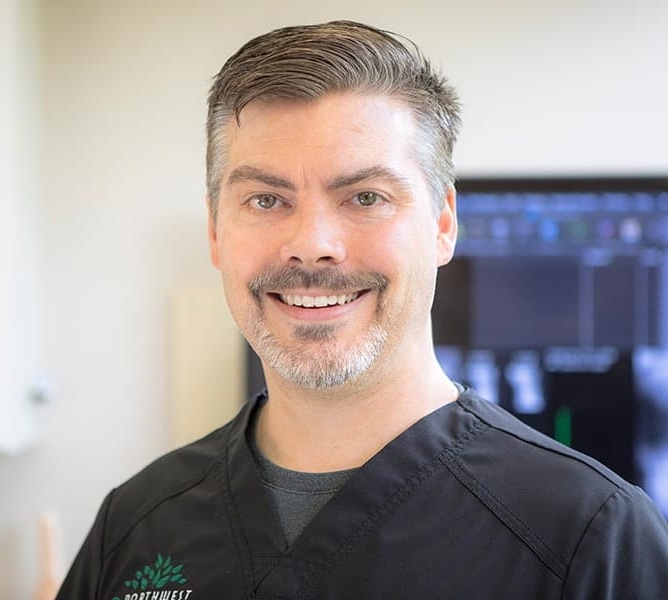
Dr. Ryan Wood, ND, DC, RMSK, is the Founder & Clinical Director of NW Regen. A licensed Naturopathic and Chiropractic physician certified in musculoskeletal sonography, he focuses on interventional orthopedic and orthobiologic medicine — including PRP, prolotherapy, and adipose-derived stem cell therapies — as well as general musculoskeletal and non-surgical orthopedic medicine. He is the West Coast’s leading Stellate Ganglion Block specialist, having performed nearly 3,000 DSR-SGB procedures for trauma, dysautonomia, and post-COVID syndromes since 2017. Dr. Wood is a lecturer and instructor for the Hackett Hemwall Patterson Foundation and the European School of Prolotherapy. He teaches interventional regenerative orthopedics and diagnostic ultrasound and provides hands-on physician training in SGB domestically and internationally. With almost two decades of orthopedic practice across multiple disciplines, he brings extensive experience to the diagnosis and management of complex cases.