Head pain is disruptive enough on its own. But many patients with occipital neuralgia describe something else alongside the pain: trouble concentrating, a mental fuzziness that doesn’t lift even when the pain briefly eases. It raises a fair question — is the brain fog actually connected, or just a coincidence of a bad day?
What Is Occipital Neuralgia?
Occipital neuralgia involves irritation or entrapment of the occipital nerves — the greater, lesser, and third occipital nerves that run from the upper neck through the scalp. When irritated, they can cause sharp, shooting, or burning pain starting at the base of the skull, sometimes radiating toward the front of the head.
The Brain Fog Question
To be straightforward about the evidence: brain fog isn’t traditionally listed as a core diagnostic symptom of occipital neuralgia in clinical literature the way pain and scalp sensitivity are. But the connection patients describe fits a broader pattern we see across chronic pain and nervous system conditions — one that shows up in our POTS and EDS patients too. Persistent pain places an ongoing cognitive load on the brain, and disrupted sleep from head pain compounds that further.
Possible Contributing Mechanisms
- Chronic pain itself consumes cognitive resources that would otherwise go toward focus and memory
- Muscle tension in the neck and scalp may affect local blood flow and sensory input
- Disrupted sleep from nighttime head or neck pain compounds next-day cognitive fatigue
- An irritated, overactive nervous system response — similar to what we see in other chronic pain conditions — may contribute to that generalized “foggy” feeling
A Nervous-System-Aware Approach to Treatment
At NW Regen, occipital neuralgia is treated with an understanding that pain, nerve irritation, and nervous system regulation are connected rather than separate problems. Depending on presentation, treatment may include Perineural Injection Therapy (PIT), peripheral nerve hydrodissection, or — for patients where the broader stress response is a factor — Stellate Ganglion Block.
If head and neck pain has come with mental fog you can’t quite explain, it may be worth exploring whether the two are more connected than they first appear.
Contact us to schedule a consultation with Dr. Ryan Wood.
Peer-Reviewed Research and Further Reading
Rodriguez B, Hochstrasser A, Eugster PJ, Grouzmann E, Müri RM, Z’Graggen WJ. Brain fog in neuropathic postural tachycardia syndrome may be associated with autonomic hyperarousal and improves after water drinking. Frontiers in Neuroscience, 2022;16:968725.
Denno P, Zhao S, Husain M, Hampshire A. Defining brain fog across medical conditions. 2025.
Harvard Health Publishing. Occipital neuralgia: Symptoms and treatments.
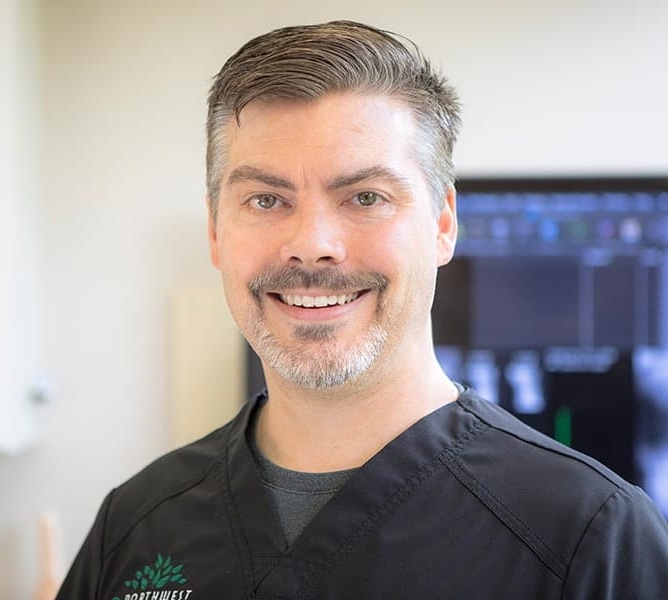
Dr. Ryan Wood, ND, DC, RMSK, is the Founder & Clinical Director of NW Regen. A licensed Naturopathic and Chiropractic physician certified in musculoskeletal sonography, he focuses on interventional orthopedic and orthobiologic medicine — including PRP, prolotherapy, and adipose-derived stem cell therapies — as well as general musculoskeletal and non-surgical orthopedic medicine. He is the West Coast’s leading Stellate Ganglion Block specialist, having performed nearly 3,000 DSR-SGB procedures for trauma, dysautonomia, and post-COVID syndromes since 2017. Dr. Wood is a lecturer and instructor for the Hackett Hemwall Patterson Foundation and the European School of Prolotherapy. He teaches interventional regenerative orthopedics and diagnostic ultrasound and provides hands-on physician training in SGB domestically and internationally. With almost two decades of orthopedic practice across multiple disciplines, he brings extensive experience to the diagnosis and management of complex cases.