If you’ve read our earlier piece on tirzepatide and joint health, you already know the basics: this dual GLP-1/GIP medication does a lot more than support weight loss — it appears to calm systemic inflammation along the way. But that raises a follow-up question we hear more and more from patients: does tirzepatide still help with inflammation at low doses, even for people who aren’t trying to lose significant weight?
What “Low-Dose” Actually Means
To be clear from the outset: low-dose tirzepatide isn’t a do-it-yourself protocol, and there’s no single “right” dose we can list here. It refers to using tirzepatide at levels below standard weight-management titration, under a physician’s guidance, with the goal of supporting inflammation and metabolic health rather than maximizing weight loss. Any dosing decision should come from a provider who’s reviewed your labs, history, and goals — not a general guideline.
The Inflammation Connection
Tirzepatide works on two hormone pathways — GLP-1 and GIP — that influence blood sugar, appetite, and, it turns out, inflammatory signaling throughout the body. Research on standard tirzepatide dosing has shown meaningful reductions in inflammatory markers like hsCRP and IL-6, and some of that effect appears to hold independent of weight loss alone.
Does This Hold True at Lower Doses?
Here’s where we want to be careful not to overstate things: most of the strongest inflammation data comes from studies using standard, FDA-approved dosing for weight management or type 2 diabetes. Research specifically isolating the anti-inflammatory effect of lower, off-label doses — separate from weight loss — is newer and more limited. The underlying mechanism (GLP-1/GIP receptor activity reducing inflammatory signaling) is the same, but the evidence base for low-dose use specifically is still developing.
Who Might Be a Candidate
A conversation about low-dose tirzepatide may be worth having if you:
- Deal with chronic low-grade inflammation or joint pain, but don’t have significant weight to lose
- Are preparing for regenerative treatments like PRP or Prolotherapy and want to optimize your body’s healing environment first
- Have metabolic markers (like elevated hsCRP) that suggest ongoing inflammatory load
As with any GLP-1/GIP medication, candidacy depends on a full medical history — including screening for personal or family history of medullary thyroid carcinoma or MEN2, given tirzepatide’s boxed warning in that area. This isn’t a fit for everyone, and that’s exactly why it’s a conversation, not a decision made from a blog post.
A Piece of a Larger Plan
At NW Regen, we look at tirzepatide the same way we look at our regenerative orthopedic treatments: as one tool that works best as part of a broader plan, not a stand-alone fix. Lowering systemic inflammation may help create better conditions for tissue repair — but it doesn’t replace addressing the joint or tendon issue directly.
If chronic inflammation or joint pain has been part of your picture and you’re curious whether tirzepatide — at any dose — makes sense for you, it’s worth a conversation.
Contact us to schedule a consultation with Dr. Ryan Wood.
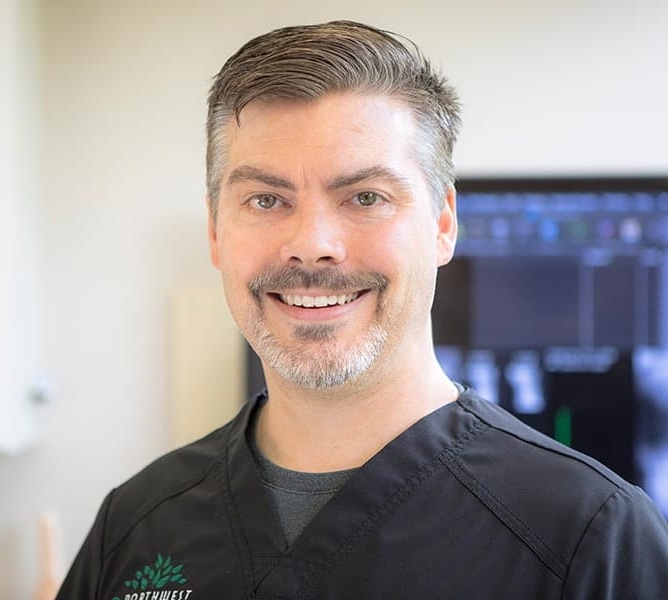
Dr. Ryan Wood, ND, DC, RMSK, is the Founder & Clinical Director of NW Regen. A licensed Naturopathic and Chiropractic physician certified in musculoskeletal sonography, he focuses on interventional orthopedic and orthobiologic medicine — including PRP, prolotherapy, and adipose-derived stem cell therapies — as well as general musculoskeletal and non-surgical orthopedic medicine. He is the West Coast’s leading Stellate Ganglion Block specialist, having performed nearly 3,000 DSR-SGB procedures for trauma, dysautonomia, and post-COVID syndromes since 2017. Dr. Wood is a lecturer and instructor for the Hackett Hemwall Patterson Foundation and the European School of Prolotherapy. He teaches interventional regenerative orthopedics and diagnostic ultrasound and provides hands-on physician training in SGB domestically and internationally. With almost two decades of orthopedic practice across multiple disciplines, he brings extensive experience to the diagnosis and management of complex cases.