Ancient Viking Wisdom, Modern Neuroscience, and Stellate Ganglion Block (SGB)
Trauma doesn’t just live in memory. It lives in the body.
If you struggle with anxiety, hypervigilance, panic, poor sleep, or nightmares, it’s not because you’re weak or broken. It’s because your nervous system learned to protect you during danger — and hasn’t yet learned how to stand down.
At NW Regen, we work directly with the nervous system using tools like Stellate Ganglion Block (SGB). But long before modern medicine, people who lived with constant threat discovered something essential:

That insight is far older — and far tougher — than most people realize.
Viking-Era Trauma Wisdom: The Origin of “Draumbinding”
Some of the earliest roots of trauma regulation come from Old Norse and early Germanic cultures, including what we often refer to as Viking-era medicine.
These Old Norse and Germanic societies lived with:
- Constant warfare
- Harsh environments
- High injury and mortality
They learned quickly that: A warrior who cannot sleep or regulate fear becomes ineffective — and unsafe.

Rather than encouraging endless storytelling or emotional release, Norse healers practiced Draumbinding — literally “binding the dream.”
Fear, intrusive thoughts, and disturbing dreams were acknowledged — then contained so the body could rest and recover. This wasn’t emotional suppression. It was functional survival. In modern terms: calm the nervous system first.
This is why trauma recovery must begin with regulation, not forced processing.
From Ancient Practice to Modern Neuroscience
Over centuries, the language changed, but the principle stayed the same. Modern trauma care now calls this:
- Containment
- Stabilization
- Phase-based trauma treatment
- Somatic regulation
Neuroscience confirms why it works:
- It reduces amygdala overactivation
- Preserves prefrontal control
- Prevents memory reconsolidation during stress
- Protects sleep architecture
This same biology is why Stellate Ganglion Block (SGB) can be so effective.
When the nervous system remains stuck in high alert, the brain cannot rest, process, or integrate experience. Sleep fragments. Emotions spike. The body reacts as if danger is still present.
Trauma Recovery Starts in the Body
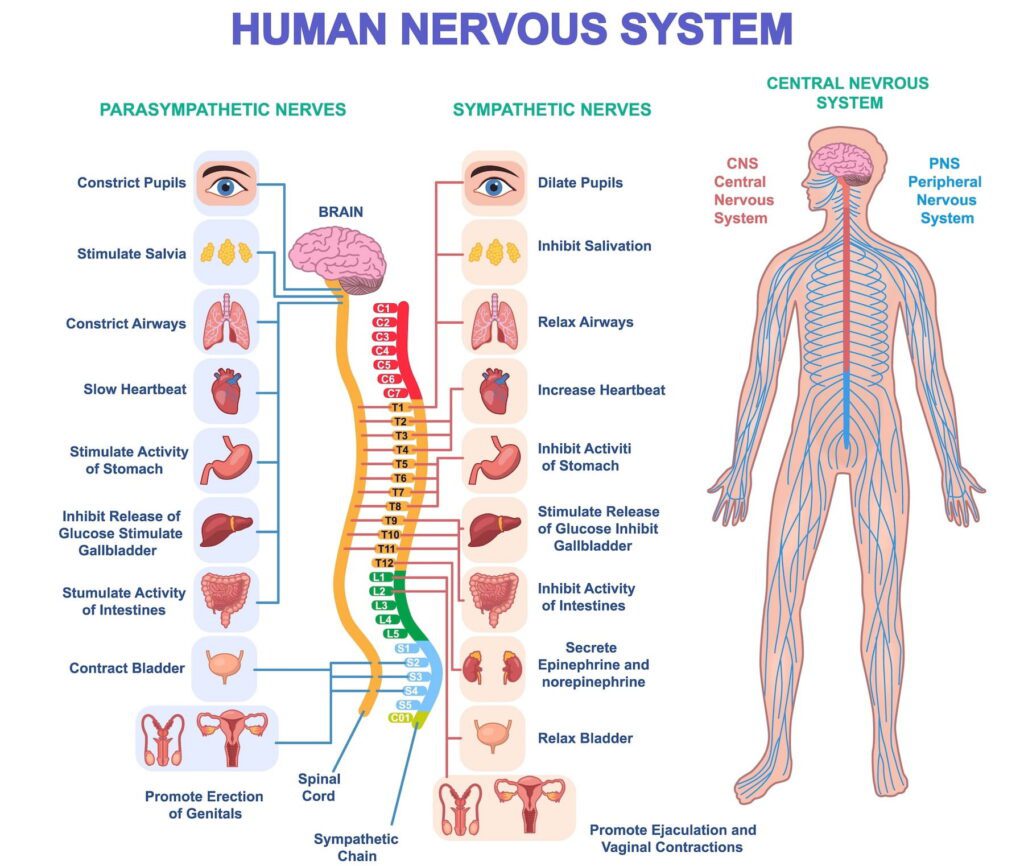
Modern neuroscience shows that trauma primarily affects the autonomic nervous system, especially the balance between:
- Sympathetic activation (fight-or-flight)
- Parasympathetic regulation (rest, recovery, safety)
How Stellate Ganglion Block (SGB) Fits In
SGB temporarily reduces excessive sympathetic (fight-or-flight) signaling.
Many patients experience:
- Reduced anxiety and panic
- Fewer nightmares
- Improved sleep
- Emotional steadiness
But SGB works best when paired with daily regulation practices that teach the nervous system how to stay calm.
Simple Nervous System Tools You Can Use Today
These practices are gentle, safe, and take only minutes. They are especially helpful before and after SGB, but beneficial for anyone with trauma-related symptoms.

AM: Daytime Regulation (1–3 Minutes)
Use this anytime you notice anxiety, chest tightness, racing thoughts, or emotional overwhelm.

Step 1: Orient to Safety (30 seconds)
To pull the brain out of threat mode and into the present moment, silently name:
- Three (3) things you can see
- Two (2) things you can physically feel

Step 2: Slow Breathing with Sound (1–2 minutes)
- Inhale through your nose for 4 seconds
- Exhale through your mouth for 6–8 seconds
- Add a soft, gentle hum on the exhale
- Repeat 3–6 breaths.
Long exhales and humming activate calming vagal pathways and rapidly reduce fight-or-flight signaling. Never force the breath or the sound.

Step 3: Contain the Stress (10 seconds)
Without analyzing it:
- Imagine placing the stress into a container
- Close it
- Say silently: “This is contained for now.”
Then return to what you were doing.
PM: Nighttime Regulation for Sleep & Nightmares (5–10 Minutes)
Nighttime is often harder because emotional memory networks are more active and conscious control is reduced. This routine protects sleep.

Step 1: Prepare the Space
- Dim the lights
- Turn off screens
- Get physically comfortable
This signals safety to the nervous system.

Step 2: Breathing for Sleep
- Inhale through your nose for 4 seconds
- Exhale through your mouth for 8 seconds with a soft hum
- Repeat 5–7 breaths
Warmth, heaviness, or slowing thoughts are signs the nervous system is settling.

Step 3: Bind the Dream (Containment)
Without replaying details:
- Imagine troubling thoughts or dreams as an object
- Place it into a container
- Secure it
- Place it outside your sleeping space
Say silently or aloud: “This belongs to the past. Tonight, my body rests.”
Allow sleep to come naturally.

Instead:
- Place one hand on your chest or belly
- Take three slow humming exhales
- Repeat the boundary statement
- Let your body settle back into sleep

Why This Matters After SGB
SGB creates a window of nervous system regulation. These practices:
- Help maintain the calming effect
- Reduce re-triggering
- Reinforce nervous system learning
- Improve durability of results
Think of SGB as resetting the system — and these tools as teaching it how to stay reset.
What to Avoid Early in Recovery
During stress or early post-SGB recovery, avoid these actions that can worsen symptoms:
- Forced emotional release
- Aggressive breathwork
- Hyperventilation
- Repeated trauma storytelling
The Takeaway
Draumbinding isn’t trendy psychology. It’s survival-based medicine — refined over centuries and now backed by neuroscience. Whether through SGB, breathing, containment, or sleep protection, the message is the same: Calm the body first. Healing follows. Contact us at NW Regen to learn more about SGBs with Dr. Wood.

Dr. Ryan Wood is a licensed Naturopathic and Chiropractic physician focusing on interventional orthopedic and orthobiologic medicine and injection therapies as well as general musculoskeletal and non-surgical orthopedic medicine.
With almost two decades of orthopedic practice across multiple disciplines, he has the necessary experience to ensure proper diagnoses and management of complex cases.